Holi Hodgkin

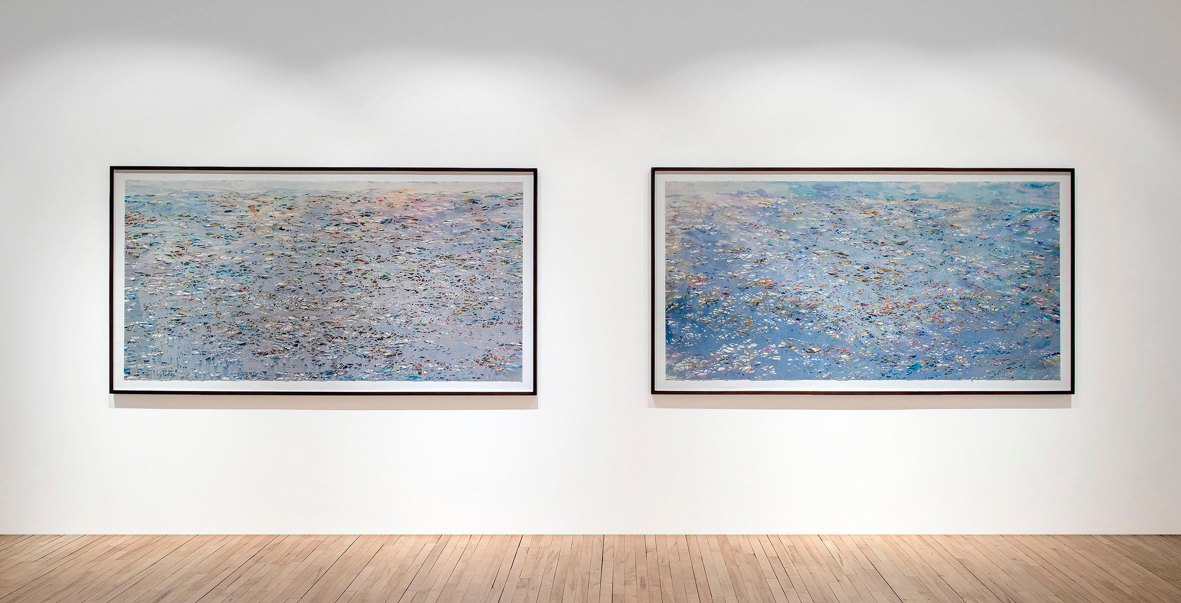
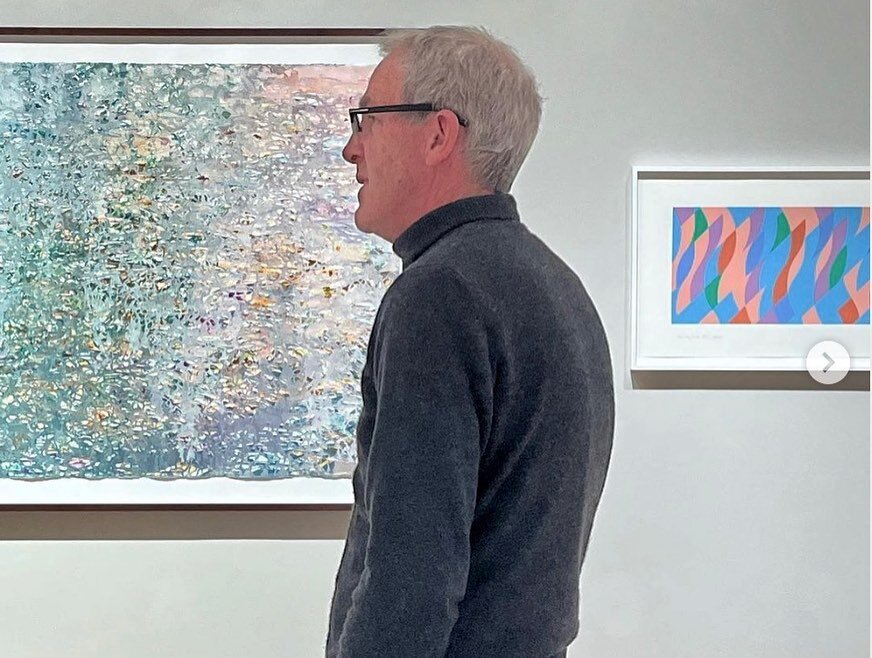
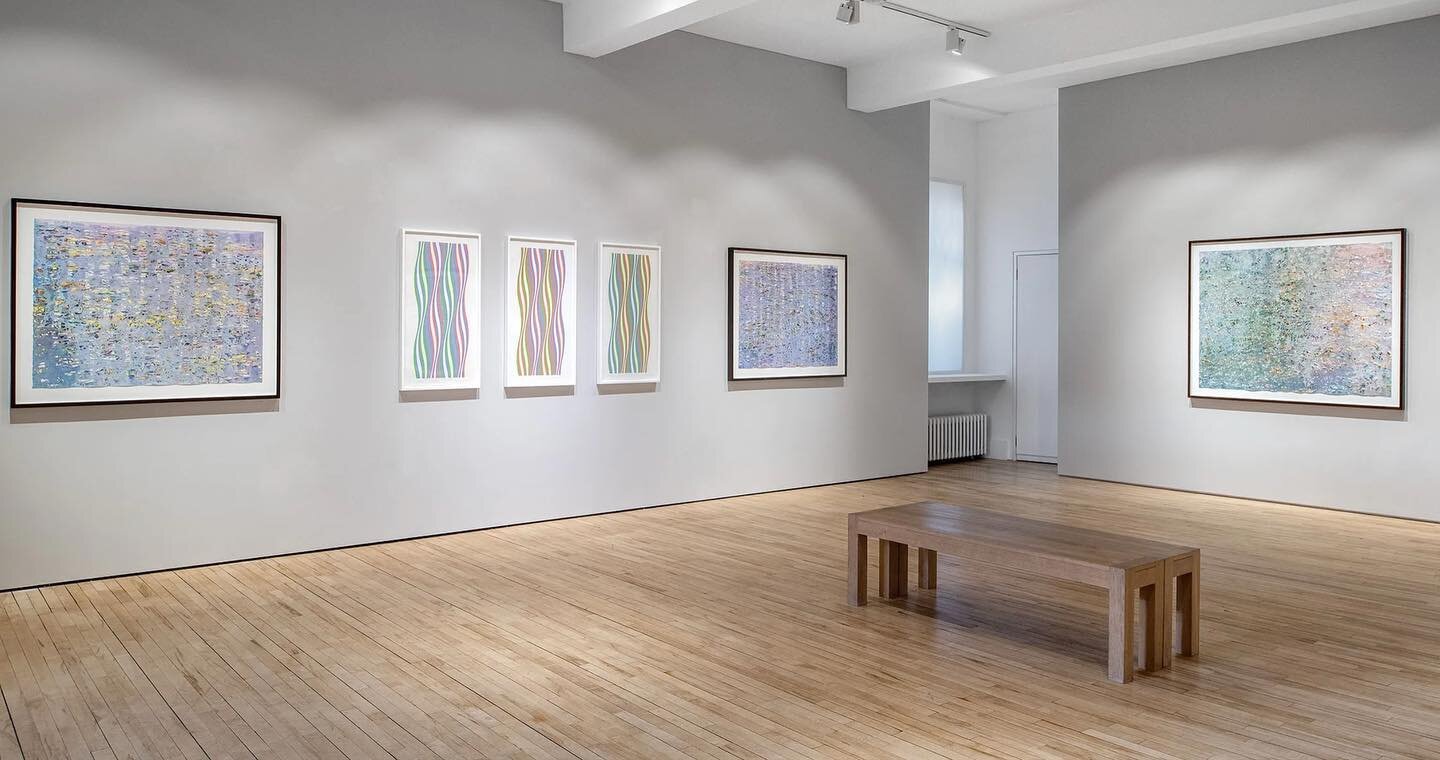
Howard Hodgkin feels his way through the world in colour. It conveys desire, longing and loss in equal measure. And in the new work it has outgrown its intimate frame (although the frame remains, as a container of vision and experience), to embrace the viewer more wholeheartedly. If ‘As Time Goes By’ is the subject of the work it also suggests the time taken to resolve the image (the patient assembly of inks and processes in the printer’s studio), as well as the nature of its visual reception, simultaneously rapid and instinctive and slow and cumulative.


The sensory pleasure it evokes (appropriately for an artist long preoccupied with the light and colour of India) is comparable to that of the Marwari paintings now showing at the British Museum (‘Garden & Cosmos’: The Royal Paintings of Jodhpur). It is there in the sensual expanse of their walled gardens and pavilions, and particularly in the vivid depiction of the Holi festival, in which splashes of  colour are released over the elegant pale surfaces with the same joyful abandon that Hodgkin achieves. The riot is all the more striking for the orderly confinement, physical and psychological, within which it is enacted.


He is one of many artists drawn eastward, although his work belongs more to the garden than the cosmos, to the realm of appearance rather than the reality that exists beneath and beyond the temporal surface. The golden emptiness of ‘The Emergence of Spirit and Matter’ recalls James Lee Byer’s gilded chamber (currently on display at the Guggenheim New York), and draws inevitable parallels with other kinds of numinous space (Newman, Rothko) in which form arises from the formless.  Emptiness suggests timelessness, and the final extinguishing of that desire which shapes our conscious hours. If Hodgkin’s painting celebrates the garden’s momentary splendour, those of the Jodhpur court reveal their illusory nature, and indicate the stateless void that lies beyond it’s fecund enclosure.

Howard Hodgkin: ‘As Time Goes By’. Alan Cristea Gallery, to 11 July 2009.

Garden & Cosmos. British Museum, to 23 August 2009.

Posted on Monday, June 22, 2009 at 07:14PM by Registered Commenter[Your Name Here] in | CommentsPost a Comment

Michael Raedecker: Loosing the thread.

The ominous spaces and knotted surfaces that made Michael Raedecker’s  work mysteriously engaging and original a decade ago (Kismet 1999, left) have been replaced with something altogether more spare and understated in his new work (now at the  Camden Arts Centre). In their cerebral austerity and chromatic palour they  seem to suppress that once dynamic playful quality which gave the viewer some imaginative purchase on his world.


There is not much to go on when gazing at the large works in particular. They appear incomplete and only sketchily realised in their oddly scaled-up format. The strongest of them, a large triptych with luminous circles suggestive of sodium street lighting in a grey mist, is visually compromised by the dead weight of stitching in the heavily emphasised vertical (lamp)posts.


The smaller pieces work better: in the flowers delicately picked out with flecks of coloured thread on a musty brown field, and in the pale pink carpet motif, with its woven zig-zags and its gently animated field of tiny textile markings. The former references the Dutch genre scenes of his homeland, while the latter seductively reworks a Rothko-like numinous field in fabric and canvas.  The allusions to art history work best where they are clearest, but sometimes their obliqueness works against them, making them not so much clever as random and arbitrary.

The postmodern framing of familiar genre scenes is knowingly correct but ultimately one comes away feeling that something – atmosphere, substance, movement – has been sacrificed, and wondering whether what is left are simply paler, more deathly, versions of Peter Doig’s uncanny tableaux, just with a little signature embroidery added in.

Michael Raedecker: line-up, Camden Arts Centre, 01 May - 28 June 2009

Posted on Monday, June 1, 2009 at 12:41PM by Registered Commenter[Your Name Here] in | CommentsPost a Comment

Return to Paris

Returning to Paris, to show my work there for the first time in a decade, is a way of also returning to other times and places.

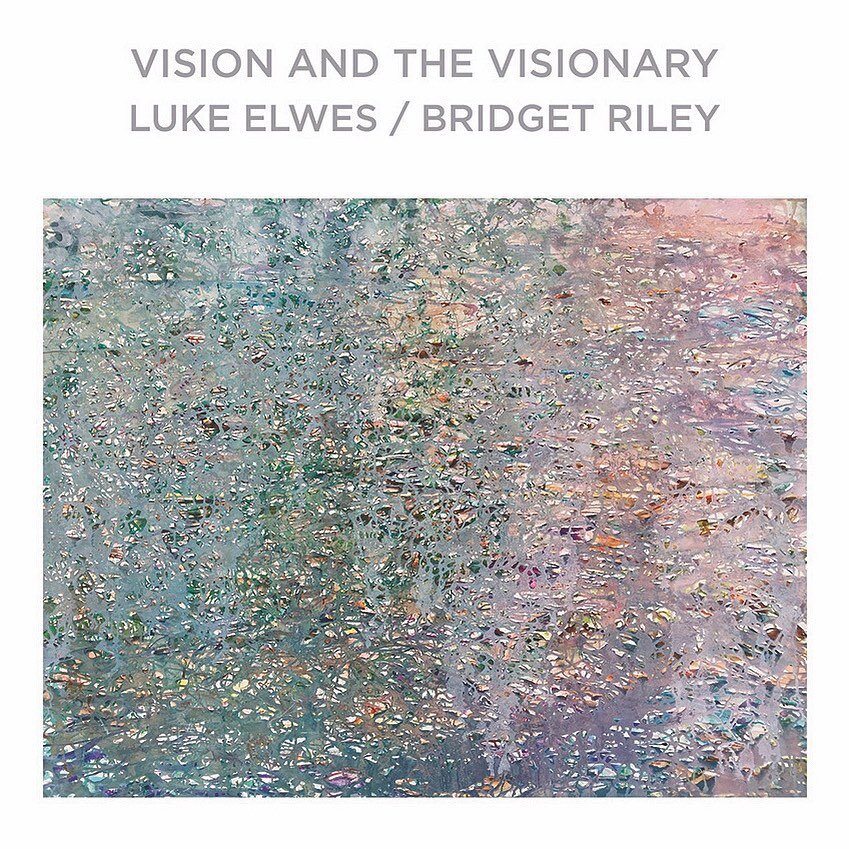
The ten paintings, made in the last five years, not only illuminate particular journeys (to North Africa, Tibet and Central America) but also reveal a recurring impulse, to excavate the ‘geographical unconscious’ and explore the many layers of history buried beneath the surface matter of these places. Brought together in one place, and viewed at a certain physical and emotional distance (that is, away from the self and the studio, in another space and another city), the paintings display a kind of circular narrative, about the life that feeds the painting that feeds the life to come.


Luke Elwes, Peintures récentes. Galerie hotel Le Marceau-Bastille, Paris. 30 April – 30 September 2009

Posted on Friday, May 1, 2009 at 11:36AM by Registered Commenter[Your Name Here] in , , | CommentsPost a Comment

Haunch of Venison’s mythological museum

Haunch of Venison began life only 7 years ago but has quickly grown into an international brand with current outlets in London, Zurich, Berlin and New York, and with future plans to open in Shanghai and Beijing. But geographical boundaries are not the only ones it has crossed. Two years ago it was bought by Christies, raising considerable anxiety in the art world (see article here) about its involvement in both the primary and secondary markets. Now it has crossed another sensitive border by asking why a commercial gallery cannot also operate as a museum space?

There are various threads that are drawn together in this new enterprise, and by the opening show Mythologies in the old museum of Mankind in Burlington Gardens, and in an uncanny echo of its physical location (between the Royal Academy and Cork street, homes of the new and old, the public and private) they are primarily to do with the circulation of art and the recycling of history.

There has in truth never been any clear distinction between gallery, museum and auction house.  Private collectors have been the lifeblood of all three, as much in the past (Henry Tate, Lord Elgin) as today. Francois Pinault’s fortune in luxury goods lies behind both Christies’ business and his own art collection (some of which has been acquired through Haunch of Venison), while Anthony d’Offay’s acumen as a dealer not only resulted in one of the Tate’s largest single donations but also laid the foundations for Haunch of Venison ‘s existence. It was d’ Offay who bought the lease on their original site from Phillips’ auctioneers, and many of the artists he once showed are today represented by the new gallery.

New art acquires critical value through its careful placement in historic collections, and commercial value in its movement between the primary and secondary markets. New galleries once relied on the guardians of the past to validate the art of the present. But what if the present is positioned in the past in such a way as to short-circuit this traditional process?

This is the question posed by Haunch of Venison, a gallery that began its life in a building once occupied by Lord Nelson and then moved from the home of an imperial hero to a museum that once housed a multitude of exotic artefacts collected from the far corners of that empire. Thus the trophies of a new global economy replace those of an old one, aligning their value as future history with that of the past.  The ghosts of history are everywhere present in Mythologies; Haunch of Venison has constructed a museum, a cabinet of curiosities, in which the aura of the past is summoned to the present, and in which the present is ‘mythologized’ for the future

The names of the makers may be familiar (Hirst, Viola, Tyson) rather than anonymous, but in the way they are curated, displayed and catalogued, their pristine objects become cultural commodities once more, ready to be acquired, collected, housed and archived.

Mythologies, Haunch of Venison, 12 march - 25 April 2009

Posted on Friday, March 20, 2009 at 02:41PM by Registered Commenter[Your Name Here] in | CommentsPost a Comment

Helen MacAlister: shingle praise

The pebbles on Helen Macalister’s beach are like words - each has its own weight and particularity and each is worn down and turned over by the rising and falling tide of language. The picture is delicately wrought, the whole image emerging at a distance from the rhythmic pattern of dark markings that disturb the pale bleached ground. The calligraphy is intentionally precise, mirroring her fascination with the shape, sound and feel of words, as well as their haunting strangeness when isolated from the whole; only a nugatory suggestion of context remains, sometimes in the form of concealed letters and phrases, and sometimes in the fragments which she draws, prints and weaves into the picture’s fabric.


There is a spare poetry in her new work, the rubbed down hardness and  salty gleam of its forms alluding to an older history, and in particular to the Gaelic tongue in which she continues to immerse herself. They are mysterious and painstaking, an act of distilled contemplation on a distant northern shore that has been continually reshaped through time and memory. They leave behind the mark of her elegant scrutiny, in a way that is reminiscent of Vija Celmins, who once said, ‘I try to leave the evidence of both thinking and making… like a fingerprint of all I know’.

Helen MacAlister, New Paintings & Drawings, Art First Projects, London, to 19 march 2009

Posted on Sunday, March 8, 2009 at 07:39PM by Registered Commenter[Your Name Here] in | CommentsPost a Comment
Page | 1 | 2 | 3 | 4 | 5 | Next 5 Entries